How to isolate charged objects in plastic toolboxes
Plastic toolboxes can isolate charged objects, relying on the electrical insulation properties of the plastic itself, combined with structural design and usage standards to form a complete protection. The isolation principle and implementation method can be developed from three dimensions: material, structure, and usage, as follows:
Plastic toolboxes can isolate charged objects, relying on the electrical insulation properties of the plastic itself, combined with structural design and usage standards to form a complete protection. The isolation principle and implementation method can be developed from three dimensions: material, structure, and usage, as follows:
1、 Core: The Electrical Insulation Essence of Plastic Materials
The key to isolating charged objects is to block the "current path", and plastics belong to high molecular polymers, with almost no freely moving electrons or ions in their molecular structure (which is a necessary condition for conductivity), thus possessing natural electrical insulation ability, which can effectively prevent current from conducting from charged objects to the outside (such as the human body, metal parts).
2�����、 Assistance: Structural design enhances isolation effect
Simple insulation materials require a reasonable structure to avoid "accidental conductivity" (such as contact between charged objects and external metals, or insulation failure caused by liquid infiltration). Common design details include:
1. Fully enclosed/semi enclosed shell, blocking contact of conductive medium
Toolboxes often adopt sealed or flip design to prevent external metal parts (such as keys and screwdrivers) and conductive liquids (such as water and oil) from entering the box and coming into contact with charged objects (such as wires and terminals). Once the conductive medium is connected to the "charged object" and the "external conductor", a current path may be formed, and a closed structure can physically cut off this contact.
2. Internal partition/insulation layer to avoid mutual interference between charged objects
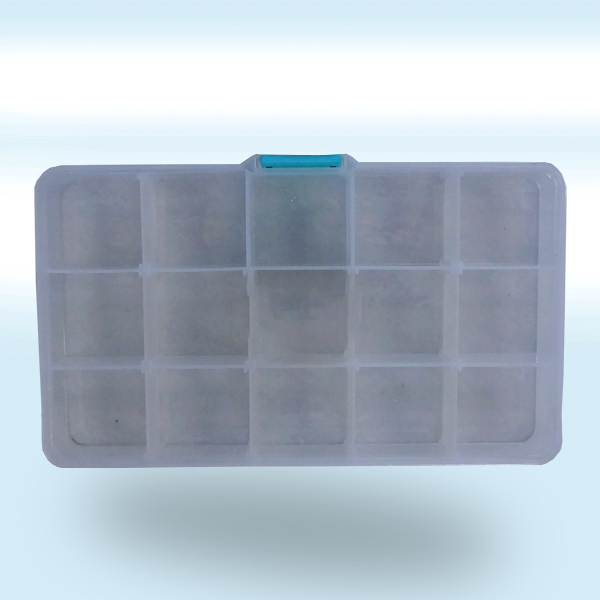
Some professional toolboxes will be designed with independent internal compartments (such as plastic partitions, removable insulation boxes) to separate and store charged objects of different voltage levels (such as low-voltage terminals, high-voltage connectors), or to isolate charged objects from tools (such as metal wrenches) to prevent "cross voltage discharge" or "accidental short circuit" caused by object collisions.
3. No exposed metal parts, eliminating potential conductivity hazards
The hinges, locks, handles and other accessories of the excellent insulation toolbox are made of plastic materials (or metal wrapped with insulation coating), avoiding the use of metal parts - if the accessories are metal and accidentally come into contact with live objects inside the box, they may become "conductive bridges", causing external personnel to come into contact with electricity, while all plastic accessories can eliminate this risk.
4. Anti slip and anti drop design to reduce insulation structure damage
The outer wall of the toolbox should have anti slip patterns and the bottom should be cushioned to reduce the probability of accidental dropping or collision. If the plastic shell cracks or gaps due to dropping, it may expose charged objects inside or allow water and dust to infiltrate and damage the insulation. Therefore, structural strength design is also an important guarantee for isolation effect.
3、 Key: Use standards to ensure effective isolation
Even if the materials and structure meet the standards, improper use may still cause isolation failure, and the following specifications should be followed:
1. Match voltage level and use within the specified range
The insulation performance of different plastics has a "voltage upper limit" (e.g. ABS toolbox is only suitable for 220V low voltage and cannot store 10kV high voltage components). Before use, it is necessary to confirm the "insulation level identification" of the toolbox (e.g. product label "suitable for AC 500V or below") to avoid insulation breakdown caused by overpressure (current forcibly penetrates the plastic, causing conductivity).
2. Keep the box dry and clean to avoid a decrease in insulation performance
The insulation of plastic can be affected by moisture and oil stains (such as the formation of a "surface conductive layer" after moisture adheres), so it is necessary to regularly clean the box to avoid water and oil accumulation inside the box; If used in a humid environment, desiccants can be placed inside the box to keep the interior dry.
3. Avoid shell damage and replace the faulty toolbox in a timely manner
If the toolbox shows cracks, holes, or plastic aging (such as surface brittleness or discoloration), it should be immediately stopped from use - the damaged area may expose charged objects directly or allow external conductive media to enter, at which point the insulation function has failed and continuing to use carries the risk of electric shock.




 Home
Home
 Product
 Wechat
 Telephone